
Terminology
Get familiar with the language we use to describe the programmatic supply chain.
Primary Sellers
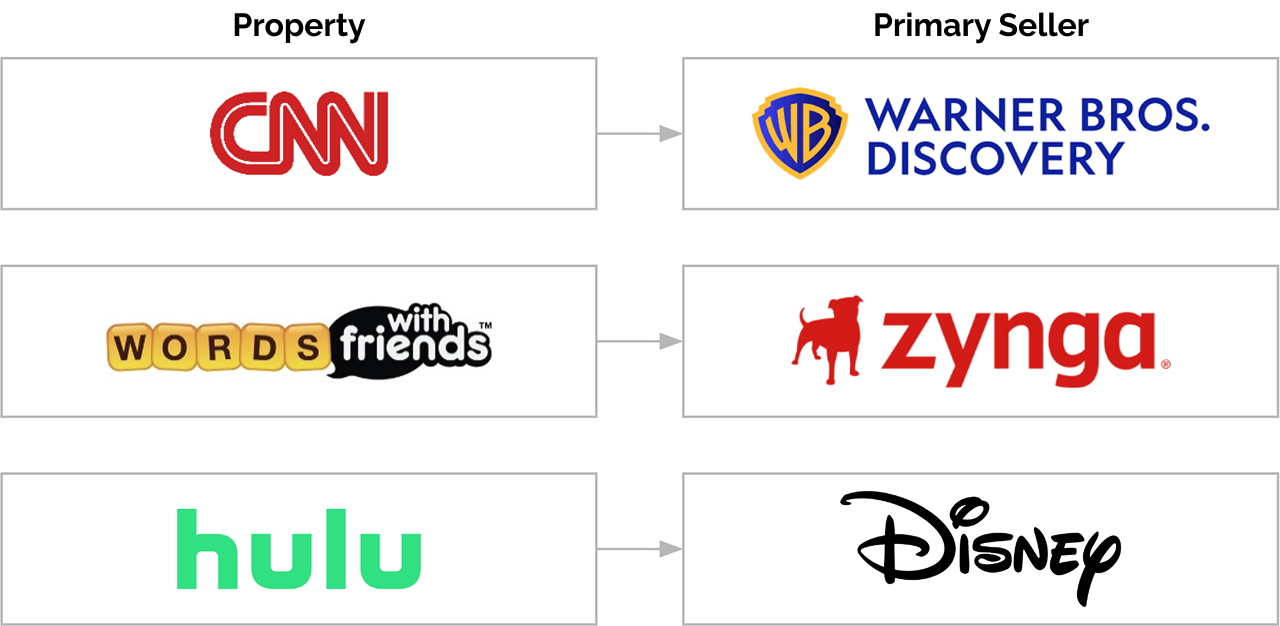
We start by identifying the company that controls programmatic monetization for each website, mobile app, or CTV app. The primary seller is typically the publisher:
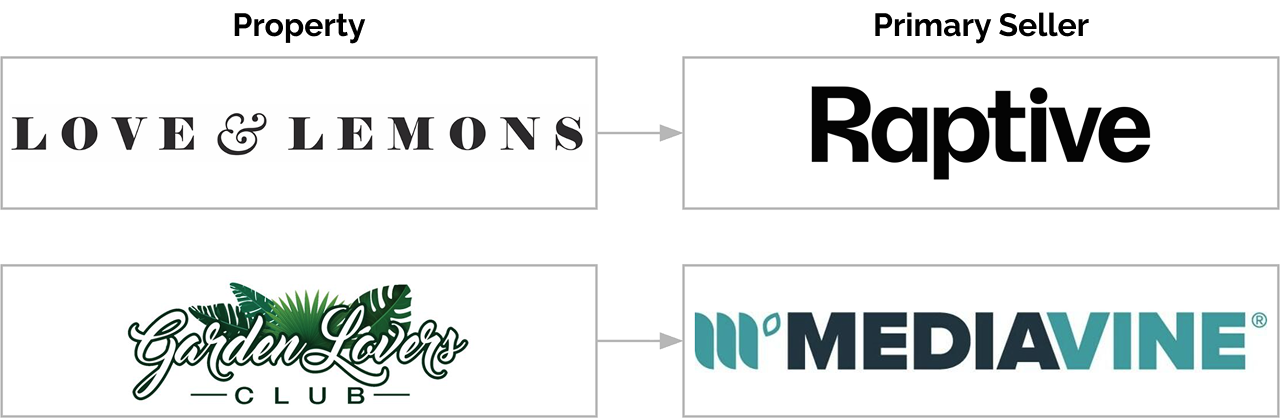
In some cases, the primary seller is an exclusive representative of the publisher:
Supply Chain Directness
Supply chains where the Exchange pays the primary seller are direct.

Everything else is indirect.

Not all indirect paths are wasteful reselling. We identify four types of indirect supply chains:
| Outsourced Yield Management | The delegation of sales rights from the publisher to a monetization partner for a minority of user sessions. |
| Content Syndication | Partnerships in which a media company distributes its content via a third party website or app in return for advertising sales rights. |
| Proprietary Placements | Ad units, typically with non-standard creative executions, that are exclusively monetized by a company other than the publisher. |
| Rebroadcasting | Auctions for which the seller does not control the final ad serving decision. |
The Marketer's Guide To Programmatic Reselling provides detailed explanations and examples of our directness framework.
Jounce Classifications
Both direct and indirect supply chains sometimes lead to ad products that have little or no value to marketers. Based on considerations of both inventory quality and supply chain directness, we classify every programmatic supply chain as one of the following:
| Bellwether | Maximally direct supply chains operated by a company that is currently on Jounce's list of Bellwether sellers. We manually monitor these sellers and have high confidence that they implement robust quality control procedures. Bellwether sellers span web, mobile app, and CTV supply and provide high scale access to all three of these environments. You can find more details about our current bellwether list in our January 2025 Report. ✓ Jounce Recommendation: Buy |
| Premium | Maximally direct paths to additional sources of supply that meet high quality standards but are not manually monitored by Jounce. Our automated measurement systems indicate Premium supply meets the same quality standards as Bellwether supply. These supply chains provide additional access to trusted supply for buyers that need maximum scale. ✓ Jounce Recommendation: Buy |
| Rebroadcasting | Value-extracting resold auctions that lead to Premium or Bellwether supply. Rebroadcasting auctions provide inefficient access to otherwise high quality supply. Further, rebroadcasting auctions do not provide any additional inventory access that is not available through Bellwether and Premium supply chains. ✗ Jounce Recommendation: Block |
| Cheap Reach | Supply with chronically poor attention. Cheap reach supply includes ad placements that render when out of view, placements that rapidly auto-refresh, and sites and apps with high ad density. Cheap reach supply additionally includes sites and apps that have very low audience engagement, typically the result of short session duration and high bounce rates. ✗ Jounce Recommendation: Block |
| Made For Advertising | Inventory that primarily exists to capture an ad arbitrage opportunity. Made For Advertising (MFA) inventory can generate superficial success metrics like ad viewability and video completion rates, but this inventory has no measurable effect on consumer purchase decisions. ✗ Jounce Recommendation: Block |
| High Risk | Supply chains with a documented history of violating industry compliance standards. High risk supply chains include both non-compliant inventory (e.g., illicit content) as well as non-compliant auctions (e.g., inventory misrepresentation). Each ad tech platform has unique compliance standards, so we base our high risk assessments on the most widely-adopted policies, which we document here. ✗ Jounce Recommendation: Block |
The Marketer's Guide To Supply Path Optimization provides detailed explanations and examples of our classification framework.